Is the AirPods 1St Generation Truly Wireless Still Good in 2026? Long-Term Review
I've been using a pair of AirPods 1st Generation for several months in 2026 — not as my daily driver for everything, but as a realistic test of whether a decade-old truly wireless product still holds up. I bought a used pair because I was curious: could these little white earbuds, introduced in 2016 and once the poster child of wireless convenience, remain useful today? What I found was a mix of nostalgia, genuine convenience, and hard limits that matter depending on how you listen and what you expect.
Why I picked them up (and what I expected)
I'll be honest: part of my reason for buying a pair was curiosity. I wanted to experience the original AirPods' seamless Apple pairing and see how the W1-era convenience compares to modern chips. I also wanted a cheap, pocketable pair for casual walks and quick calls. I expected the sound to be modest compared to modern earbuds, the battery to be reduced (they're ten years old at this point), and the feature set to be minimal — no active noise cancellation, no spatial audio, and limited voice assistant features. What surprised me at first was how comfortable and unobtrusive they still are, and how well the basic pairing and everyday use still function even in 2026.
My testing setup and conditions
In my testing I used the AirPods with an iPhone 14 and a MacBook Air (both updated to the latest OS on my devices during the test), and I also paired them to an Android phone to check cross-platform quirks. I tested music playback, voice calls, podcast listening, casual video watching, and a few short multiplayer game sessions to judge latency and stability. I used the earbuds for commutes, walks, and home use across several months so I could observe battery decline, case behavior, and real-world reliability.
First impressions and day-to-day comfort
From the moment I first paired them, the AirPods delivered the smooth Apple pairing experience they're known for. The pop-up on my iPhone still appears and the initial setup is literally one or two taps. In my experience, that pairing convenience remains one of the AirPods' strongest long-term advantages if you live in the Apple ecosystem.
Fit and comfort are subjective, but I found these to be extremely comfortable for long listening sessions — certainly more so than many silicone-tipped in-ear designs that press into the ear canal. The hard plastic shape sits in the ear and is very lightweight; I wore them for 90–120 minute podcast sessions without soreness. That said, if you prefer a tight, sealed fit for bass or worry about earbuds falling out during exercise, the AirPods' open design won't provide the same isolation or security as modern sport-oriented earbuds.
Sound quality — what I liked and what bothered me
What I found was that the AirPods 1st Gen deliver a clear, balanced midrange and a pleasantly transparent treble. Vocals and acoustic instruments sound natural and uncolored — great for podcasts and vocal-forward music. However, in 2026 standards the bass response is thin compared to contemporary true wireless models. Tracks that rely on deep sub-bass lack punch and impact. If you're someone who lives for heavy bass or EDM, you'll notice the limits.
Another thing I noticed is the lack of sound personalization. There are no built-in EQ presets on the earbuds themselves, and any equalization has to come from the source device. Compared to newer models that offer on-device sound processing, adaptive EQ, and spatial audio, the original AirPods feel plain. But for straightforward listening — audiobooks, indie, jazz, acoustic sets — they remain enjoyable.
Battery life and real-world degradation
Apple originally rated the AirPods 1st Gen for around 5 hours of listening on a new pair. In my experience with the used pair I bought, I was getting about 2 to 3 hours of continuous music playback on a fresh charge. That decline is what I'd expect from lithium-ion cells that have seen many charge cycles over a decade. The charging case still provided a few additional charges, but it no longer restored them to "as-new" endurance — think of the case as adding two or three full charges rather than the original many-day topping.
Battery degradation is the single biggest practical downside in 2026. For short outings and quick calls the reduced runtime is fine, but for long flights or full workdays you'll need a backup or frequent recharges. If you buy a used pair, I recommend insisting on a battery test or demonstration so you can see actual run times.
Find top-rated Audio & Headphones products at great prices.
Shop Amazon →Connectivity, latency, and cross-platform behavior
Pairing with my Apple devices was still frictionless. The W1 chip's handoff and syncing across devices work as Apple advertised, and automatic switching between phone and Mac remains pretty smooth for me. On Android, pairing is straightforward via Bluetooth settings, but you lose the pop-up animations and some conveniences like automatic switching and certain firmware updates.
Latency is noticeable when playing competitive games or watching video without built-in low-latency modes. For casual video and streaming the lag is manageable — I had to dial in the audio delay on a few apps — but for gaming I preferred wired headphones or modern low-latency true wireless earbuds. Calls were passable in quiet environments, but in noisy settings the microphones struggled compared to newer models with multi-mic beamforming and noise suppression.
Durability, charging case, and daily maintenance
My pair showed the expected wear: a bit of scuffing on the case and some discoloration on the stems. Cleaning is straightforward — a careful toothbrush and a soft cloth restored most grime. The hinge on my case stayed stiff and functional. The Lightning charging port is one limitation: it still works fine, but in 2026 many users expect USB‑C. If you prefer wireless charging, the 1st Gen case does not support Qi charging.
One practical point: if you need battery service, Apple and third-party repair shops can replace AirPod batteries or perform a swap, but at a cost. For many buy…
Software features and ecosystem integration
These AirPods predate spatial audio and some of the more recent software refinements. You won't get features like personalized spatial audio or on-device head tracking, and "Hey Siri" hands-free activation wasn't introduced until later hardware. What you do get is instant pairing, basic automatic ear detection, and play/pause when removing an earbud — still handy for everyday convenience.
Firmware updates are less frequent and more limited in scope than modern AirPods, but Apple still periodically pushed bug fixes when my pair was actively connected to my iPhone. Overall, the integration with iOS/macOS is still smoother than most third-party earbuds, and that matters for seamless day-to-day use.
Pros & Cons
- Pros
- Exceptionally comfortable and lightweight for long listening sessions.
- Very smooth Apple pairing experience with iPhone/Mac.
- Natural, clear midrange and treble — great for voices and acoustic music.
- Simple, no-fuss use for quick calls and short commutes.
- Durable design that has held up well with basic maintenance.
- Cons
- Significantly reduced battery life on used/older units — expect 2–3 hours in many cases.
- No active noise cancellation or transparency mode.
- Thin bass response compared to modern earbuds.
- No wireless (Qi) charging on the original case and uses Lightning instead of USB-C.
- Microphones struggle in noisy environments compared to modern beamforming mics.
At-a-glance comparison
| Model | Year Released | Active Noise Cancellation | Typical Battery (new, claimed) | Charging Case | Key Advantages |
|---|---|---|---|---|---|
| AirPods (1st Gen) | 2016 | No | ~5 hours listening | Lightning (no wireless) | Smooth Apple pairing, comfortable, lightweight |
| AirPods (2nd Gen) | 2019 | No | ~5 hours listening | Lightning (wireless case optional) | Improved H1 chip, faster switching, "Hey Siri" |
| AirPods Pro (2nd Gen) | 2022 | Yes | ~6 hours (varies with ANC) | USB-C / Wireless (depending on model) | ANC, Transparency, Spatial Audio, stronger bass |
Who should consider buying AirPods 1st Gen in 2026?
In my experience, the AirPods 1st Generation can still be a smart buy in 2026 — but only for specific users and situations:
- If you want the Apple pairing experience on a budget, and you accept limited runtime and features.
- If you primarily listen to spoken-word content (podcasts, audiobooks) and value comfort over bass or isolation.
- If you need an inexpensive, reliable pair for short errands, quick calls, or as a backup to a higher-end set.
They are a poor choice if you need long battery life, strong bass, ANC, wireless charging, or the latest software features. For those use cases, a newer pair (even mid-range models from recent years) will offer noticeably better value and day-to-day experience.
Discover deals on Audio & Headphones — updated daily.
Browse Now →Buying guide — what to check when you buy used AirPods 1st Gen
If you're considering buying a used pair like I did, here are the practical checks and questions I used and recommend you use as a checklist:
- Test battery life in person: Ask the seller to play music until the earbuds die, or at least demonstrate continuous playback for a realistic period. Expect reduced runtime; confirm it meets your minimum needs.
- Inspect the case and hinge: Open and close it several times; check the Lightning port for damage and ensure the case holds charge and can actually recharge the earbuds.
- Check pairing and firmware: Pair to an iPhone and see if the pop-up and device name show correctly. Ask whether the seller kept the firmware updated — not always possible to prove but worth checking.
- Listen for mic quality: Make a quick call or record a voice memo to ensure the microphone picks up voice clearly and isn't overly noisy.
- Look for physical damage: Stains, deep dents, or replaced stems can indicate rough handling.
- Ask about battery service options: If battery life is poor, ask whether the seller considered battery replacement and whether you’re willing to pay for service yourself.
- Check serial number and authenticity: Verify the serial with Apple's support website where possible, and make sure the pair is complete — both earbuds and the original charging case.
Practical tips to get the most out of older AirPods
From my months of daily use, a few practical tips made the experience better:
- Reset the AirPods before pairing to your device — it often clears pairing oddities and can restore smoother switching.
- Use EQ on your source device to boost bass or tailor the sound — the hardware itself is limited, but software EQ helps.
- Carefully clean the grills with a soft brush and isopropyl wipe; clogged ports can muffle sound and affect microphone pickup.
- Carry them charged with a small power bank for longer days — the case still provides extra charges but not as many as a new model.
- Consider battery service if you really like the AirPods' fit and ecosystem integration — replacing batteries can breathe new life into an otherwise solid design.
Final thoughts — is it still “good” in 2026?
After several months of using the AirPods 1st Generation in 2026, my conclusion is nuanced. In my experience they still deliver the core conveniences that made them famous: extremely comfortable wear, seamless Apple pairing, and clear, unforced sound for voices and acoustic music. Those strengths mean they can still be "good" — especially as a cheap, comfortable pair for short listening sessions or as a backup set.
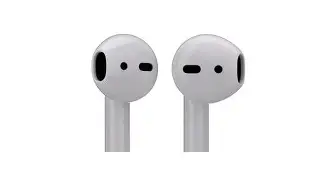
However, the hard reality is that battery degradation and a lack of modern features limit their usefulness for many people today. If you need all-day battery life, ANC, strong bass, wireless charging, or the latest software features like spatial audio and personalized sound, the AirPods 1st Gen will frustrate you. For me, they became a companion piece — handy, pleasant for certain uses, but not my daily go-to for travel or long listening sessions.
So, are they truly still good? Yes — for the right person and use case. If you value comfort and Apple ecosystem convenience and can accept shorter battery life and minimal feature set, a well-maintained pair is still useful in 2026. If you expect modern features and endurance out of the box, it's time to look at newer models.
My personal recommendation
Because I enjoy light, unobtrusive earbuds for walks and podcasts, I kept my used AirPods as a secondary pair. What I appreciated most was their effortless integration with my iPhone and the simple, distraction-free listening experience. What I disliked most was the battery — and that ultimately defines whether they're a smart buy for you. Check runtime closely, and buy with the right expectations. If you do, you may find, as I did, that a decade-old design can still be quietly useful.